Responsibility ≠ Fault - And Why Blame Is a Luxury You Can't Afford in a Crisis
A few days ago, I wrote about the difference between responsibility and fault. Since then, I've been reflecting further - and I realised there's another layer to this lesson. One that only becomes clear when the pressure's on.
In firefighting mode - when the line's down, the shipment's late, or the team's overwhelmed - the question "Who messed up?" becomes a distraction.
It's not that root cause doesn't matter. It does. Understanding what went wrong helps prevent repeat mistakes. But in the heat of the moment, solutions matter more.
Blame is retrospective. Leadership is forward-facing.
When you're managing operations, especially in high-stakes environments, you realise:
- Taking responsibility is about momentum, not guilt.
- Focusing on solutions builds trust; finger-pointing erodes it.
- Ownership accelerates recovery; blame delays it.
I've seen this play out countless times. A line stops. A report is late. A customer escalates. And the instinct - especially in hierarchical cultures - is to find fault.
But the best leaders I've worked with don't waste time assigning blame. They ask:
- "What's the next best step?"
- "Who can help?"
- "What do we need to unblock?"
Only after the dust settles do we circle back to root cause. And even then, the goal isn't punishment - it's learning. It's post-mortem understanding. The famous, "no use crying over spilt milk."
So here's the mindset shift I'd offer to anyone navigating operational leadership:
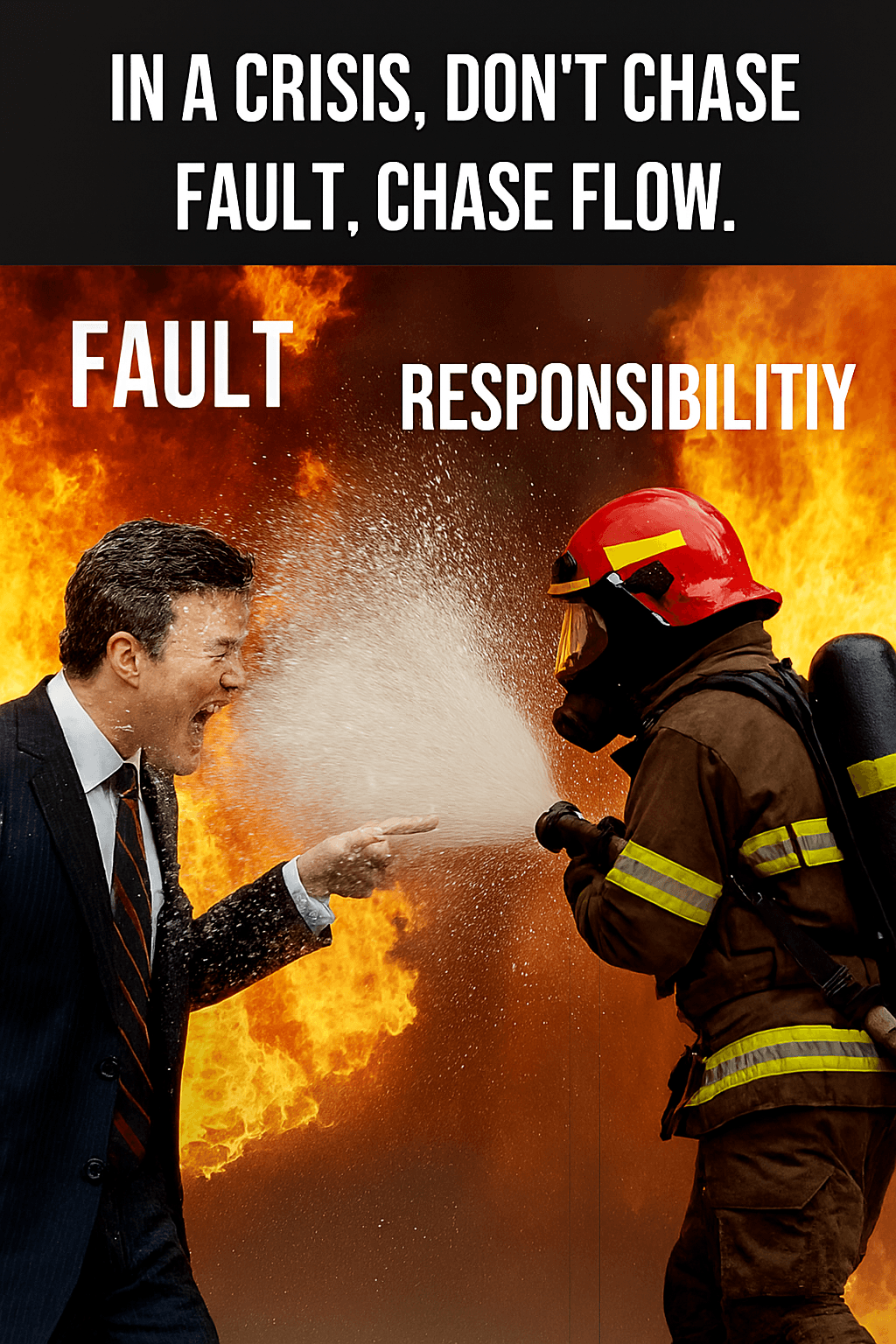
In a crisis, don't chase fault. Chase flow.
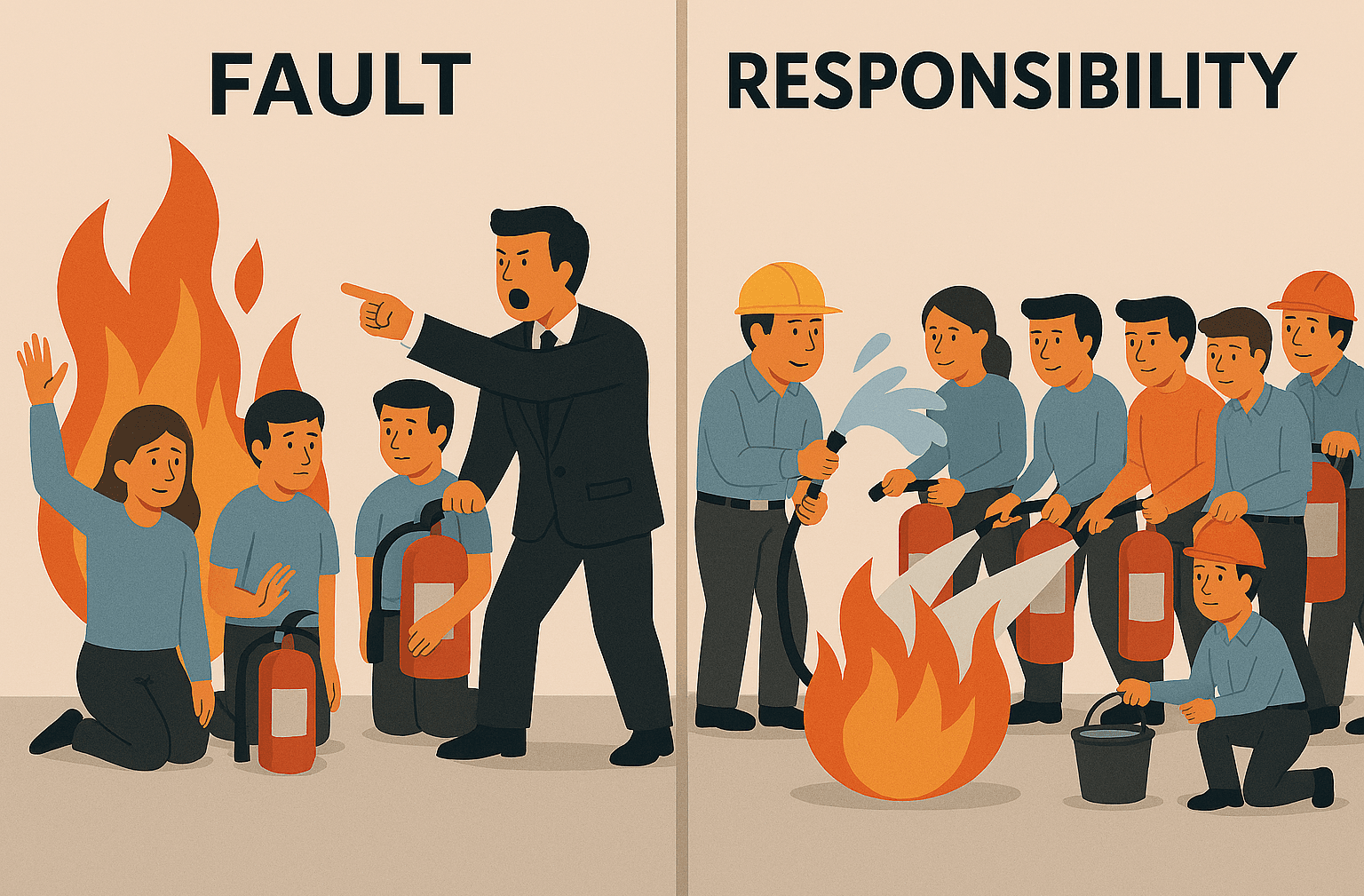
Because responsibility isn't about who caused the fire. It's about who grabs the extinguisher.