The Magic of Standard Deviation
A car can sink in an average of 2 inches of water...
That line from a quality manager stuck with me. It's a reminder that averages can be dangerously misleading. What really matters is how spread out the data is - and that's where standard deviation comes in.
For the past 10 years, I've used standard deviation across operations - supplier performance, process control, shipment trends, demand forecasting. And here's what I've learned: you can't control what you don't understand, and you can't understand a process without knowing its variation.
Why It Matters
Standard deviation tells you how consistent your data is. In operations, that means:
- Is your supplier reliable or just lucky?
- Is your process stable or chaotic?
- Can you trust your forecast or brace for surprises?
Before you improve a process, you need to know if it's under control. And control starts with understanding variation.
Beyond the Numbers
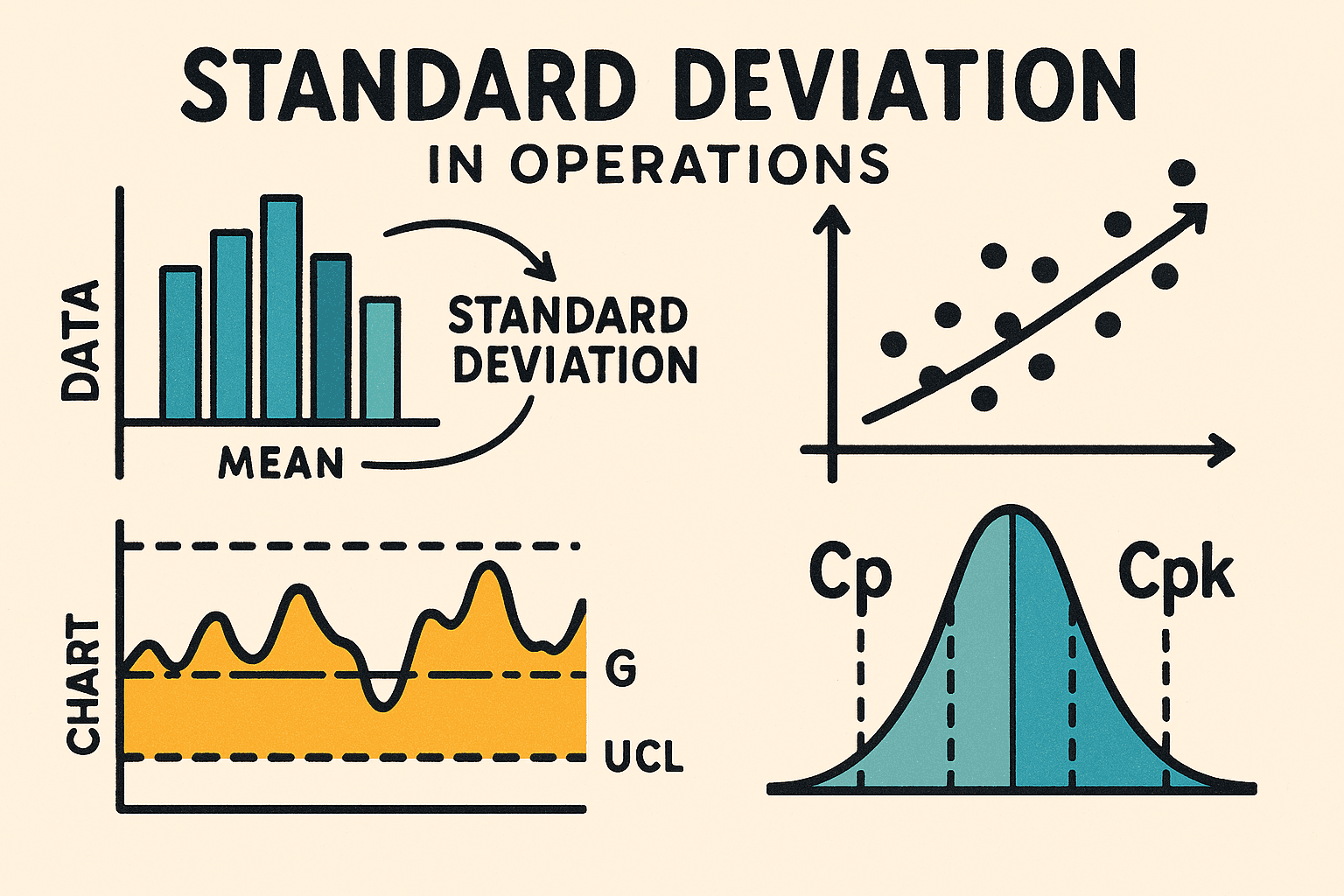
Metrics like Cp and Cpk are built on standard deviation - but they're just the tip of the iceberg. The real power lies in using deviation to:
- Spot instability before it becomes a failure.
- Make decisions based on confidence, not hope.
- Ship not just products, but capable processes.
The Bottom Line
Standard deviation isn't just a statistic. It's a daily operational compass. It helps you see beyond the average, into the heart of your process.
And once you see it, you can control it.